Jeju Island: A Complete Travel Guide to South Korea’s Volcanic Paradise
Why Jeju Island Should Be at the Top of Your Travel List
Tucked off the southern tip of the Korean Peninsula, Jeju Island is South Korea’s crown jewel — a volcanic paradise that packs dramatic coastal cliffs, emerald crater lakes, UNESCO-listed lava tubes, and pristine beaches into just 1,849 square kilometres. Whether you’re an adventure seeker, a beach lover, or a cultural explorer, Jeju delivers a travel experience unlike anywhere else in East Asia.
Jeju is not just a destination — it is a feeling. The salt air, the ancient basalt rock formations, and the slow rhythm of island life will reset you in ways that no city break ever could.
Getting to Jeju Island
Reaching Jeju is straightforward. Gimpo-Jeju is one of the busiest domestic air routes in the world, with flights from Seoul taking just 55 minutes. International travellers can also fly directly from Tokyo, Osaka, Hong Kong, and several Chinese cities. Korean Air, Asiana, Jeju Air, and T’way Air all serve the island with competitive fares.
Getting Around Once You Arrive
Renting a car or scooter is by far the best way to explore Jeju at your own pace. The island has a well-maintained circular road — Route 1132 — that wraps around the entire coastline. Public buses cover major attractions but schedules can be limited outside peak season.
Top Natural Attractions You Cannot Miss
Jeju’s landscape is the product of volcanic activity spanning millions of years, and the results are breathtaking at every turn.
Seongsan Ilchulbong (Sunrise Peak)
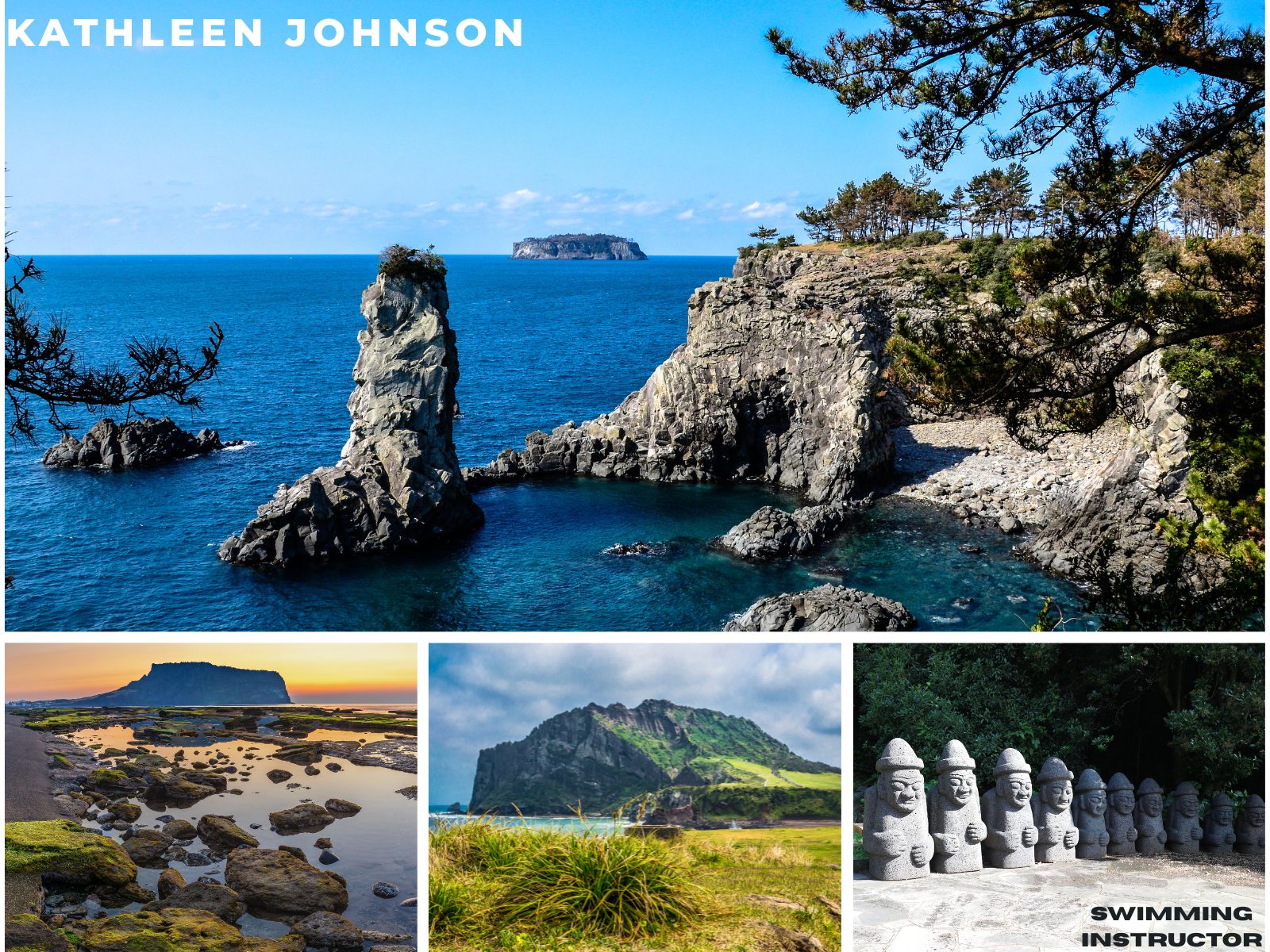
Rising 182 metres from the sea’s edge, Seongsan Ilchulbong is a UNESCO World Heritage tuff cone formed by a hydrovolcanic eruption around 5,000 years ago. The steep 30-minute hike to the summit rewards you with a panoramic view of the surrounding ocean and the massive crater below.
Manjanggul Lava Tube
One of the longest lava tube cave systems in the world, Manjanggul stretches for over 13 kilometres beneath the island’s surface. The publicly accessible section reveals cathedral-like chambers and the famous 7.6-metre lava column — the tallest in the world.
Jeju’s Cultural Highlights
The Dolharubang — Jeju’s Stone Guardians
These stout, round-eyed basalt statues are Jeju’s most beloved cultural symbol. Originally placed at village entrances to ward off evil spirits, Dolharubang (meaning “stone grandfather”) now appear everywhere on the island.
The Haenyeo — Women of the Sea
The extraordinary female free divers of Jeju have harvested the island’s coastal waters for over 1,500 years. These women descend to depths of 20 metres without oxygen equipment. The Haenyeo culture was inscribed on UNESCO’s Intangible Cultural Heritage list in 2016.
Best Time to Visit
Jeju is a year-round destination, but Spring (March-May) brings cherry blossoms and canola flowers — arguably the most beautiful time to visit. Autumn offers crisp air and golden foliage on Hallasan Mountain.
Final Thoughts
Jeju Island rewards the curious traveller who goes beyond the standard tourist checklist. Let the island’s ancient volcanic rhythm slow you down. That is where the real magic of Jeju lives.
Jeju does not ask for your itinerary. It asks for your attention — and in return, it offers some of the most spectacular scenery and warmest hospitality you will find anywhere in Asia.